A virus for which there is no cure – Increasing panic and deathcounts and scarce commodities. Home confinement and lcokdowns. Domestic and economic discord. People going on a rampage in stores and hoarding stuff in panic – supplies, medicines, sanitisers and food. Mental trauma and disorder. Quiet, calm and deserted cities and roads. Manufacturing, businesses & factories – shut. All commutes & travel – banned. Modes of transport like – Airports, buses, trains – Shut down.
All the staff of the Police, military, para-medical staff, government machinery and doctors – on duty to reinforce the law and fight the pandemic. A highly contagious, fatal Virus on the loose, and no cure in sight. And this is not a plot from some Hollywood movie – this is today’s reality. With everyone trying to just maintain status-quo, it’s been a tough few months for the world. We continue to stumble from experiment to experiment to navigate a new normal amid the coronavirus pandemic. From a personal standpoint, all of us have been practicing social distancing.
We are staying inside our homes and canceling our plans. Additionally, we are avoiding crowded spaces. On the Professional front, most of us have experienced working from home. It started with an indefinite timeline of when we would resume work from our respective offices. Businesses supplying goods and services face major operational disruptions. These challenges stem from supply chain gaps and fluctuating demand. As a result, maintaining day-to-day operations has become difficult. Retail closures, to name just a few of the many challenges businesses are currently facing.
Navigating the Shift to a Virtual Reality
The governments and leaders did what was required – the lockdown emerged as a hard but absolutely necessary wise decision, requiring full compliance. Even the business with private company registration and LLP registration allowed employees to work from home. It seemed like the best way to avoid the deadly virus and stop the infection from spreading. To arrest the spread of COVID-19, everyone was confined to their homes. As a consequence, daily dynamics radically changed: workplaces were shut down, and educational institutions followed suit.
Factories and production lines came come to a halt. Highways were quiet and airlines stopped operating flights. Essential services were operating with a skeleton or minimal staff. As educational institutions continue to rally their forces and conduct online courses, students are learning to come to terms with online education as a routine medium. For working professionals, virtual meetings over Skype and Zoom became the norm. The virtual world quickly turned into the real one, creating a scary scenario.
Navigating the Way Forward
Now, as many lockdowns around the world begin to ease, businesses, leaders & Entrepreneurs are wondering about the way forward. The thought of starting work is complex – in more ways than one. Most importantly, there is no set method or rulebook for navigating the way forward. It is in this context, that Bain & Company’s new research, Back to Work. “Advance, Retreat, Adapt, Recover” offers key strategies for tackling core problems that businesses will face in a transformed environment.
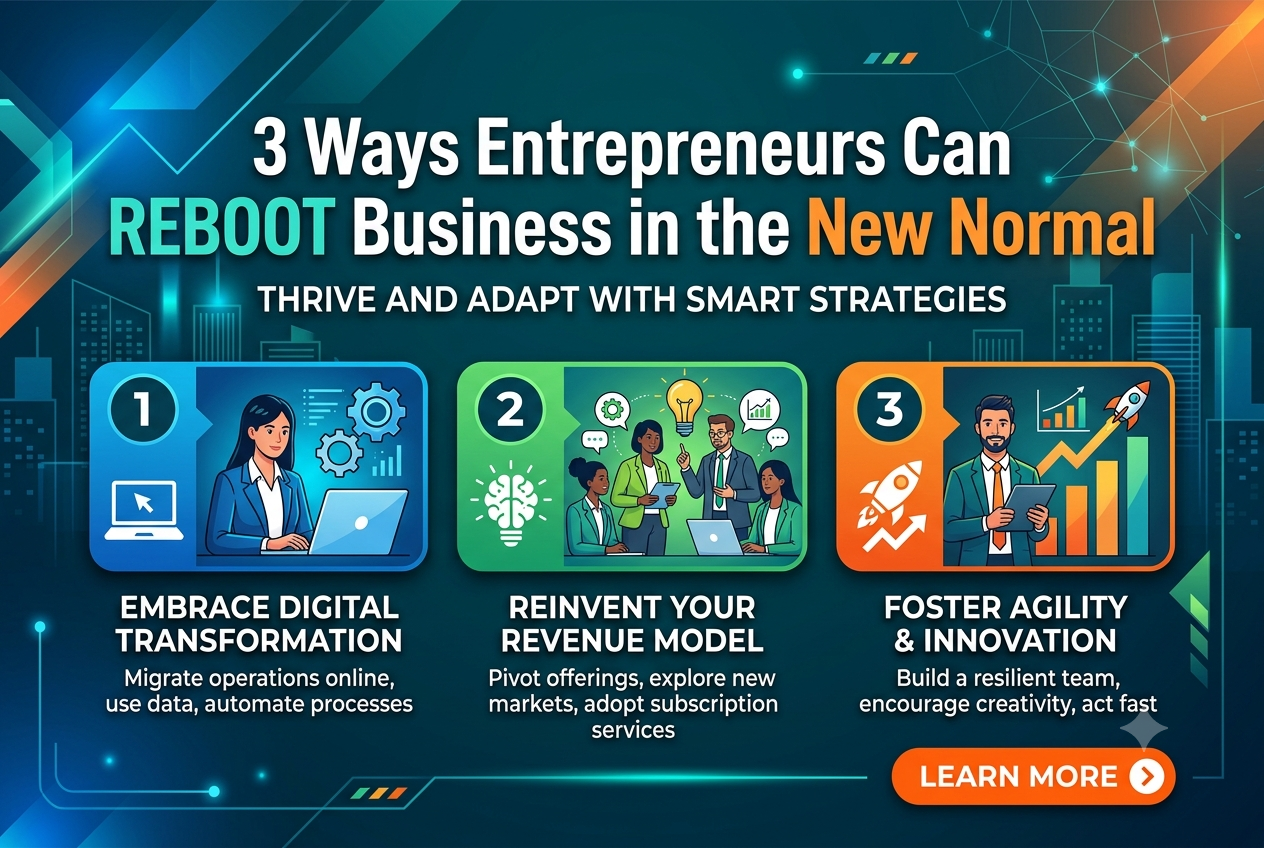
For most business professionals, returning to work will not feel like a simple restart. Instead, it will be much like starting a new business,” said Hernan Saenz. He is the head of Bain & Company’s global Performance Improvement practice. “Returning to work will be far more complex than turning the lights back on and restarting operations.” As economies slowly open up, businesses are restarting their operations. Moving forward, organizations, entrepreneurs, team leaders, and individuals must all work together to create the “New Normal.” In this new environment, safety, precautions, and awareness will play a central role. Against this backdrop, organizations will need a depth in approach and strong, agile mindset to cope. Here are a few ways to approach the situation:
Tapping inhouse Talent:
If you choose a few senior team members who can be part of a crisis team. They will be able to lay down processes, map routines and enable coordination out of chaos. Since senior members know the routines and business models of the organization. Team members are assigned specific roles and guided through imaginary scenarios. They respond based on their training and conditioning. Afterwards, the team analyzes and debates these responses to offer constructive feedback.
These discussions help evaluate how well the team works as a cohesive unit. They also reveal how effectively the group will cope during a real crisis. It will be a good idea to present them with real-life issues of the business continuity and longevity. As they are already part of the system, they can give feedback that can be useful and constructive.
Fostering Inclusivity:
Usually the leadership function by its very nature does not involve participation. The current situation calls for a different approach by the organization’s top leaders. When a business faces an uncertain future, involving team members in operations can help sustain it. Start by letting everyone know they have a stake in the company’s longevity. Then, invite them to contribute solutions.
This approach, known as participative management, doubles as an effective team-building exercise. It delivers long-term benefits for the organization. Inclusivity speeds up decision-making and ensures you receive honest, valuable feedback. Added benefits are democratization of authority and multiple views of issues at hand.
Encouraging Resilience & Adaptability:
As lockdowns ease, remote work, virtual meetings, and working from home are becoming the new normal. Consequently, for businesses to survive, companies must become increasingly resilient and prompt in their response. Adapting to with different ways to respond effectively to the crisis and business requirements. When a business faces an uncertain future, involving team members in daily operations is key to survival. As collaboration increases, protecting employee rights becomes a top priority. During challenging times, flexible work—whether in or out of the office—matters far more than formal job titles. Roles can expand as per ability and fill in gaps where required. When team members are included as decision-making stakeholders, their engagement deepens. They begin to think beyond the typical employee mindset.
Consequently, they step up to take greater ownership. Over time, they become significantly more reliable and independent. They will become stakeholders in the process and own outcomes. Newer learnings and skills will be absorbed. As roles and responsibilities expand, newer skillsets will have to be developed or possibly shared. Team bonding will be an integral part of the business continuity plan. Overall, this will ensure that a resilient, innovative gene in sown into the organization’s DNA.