Plastics have become one of the greatest challenges for companies and manufacturing industries. Organisations producing packaging and goods can generate large volumes of plastic waste. However, implementing responsible recycling practices can convert this waste into useful raw materials for manufacturing.
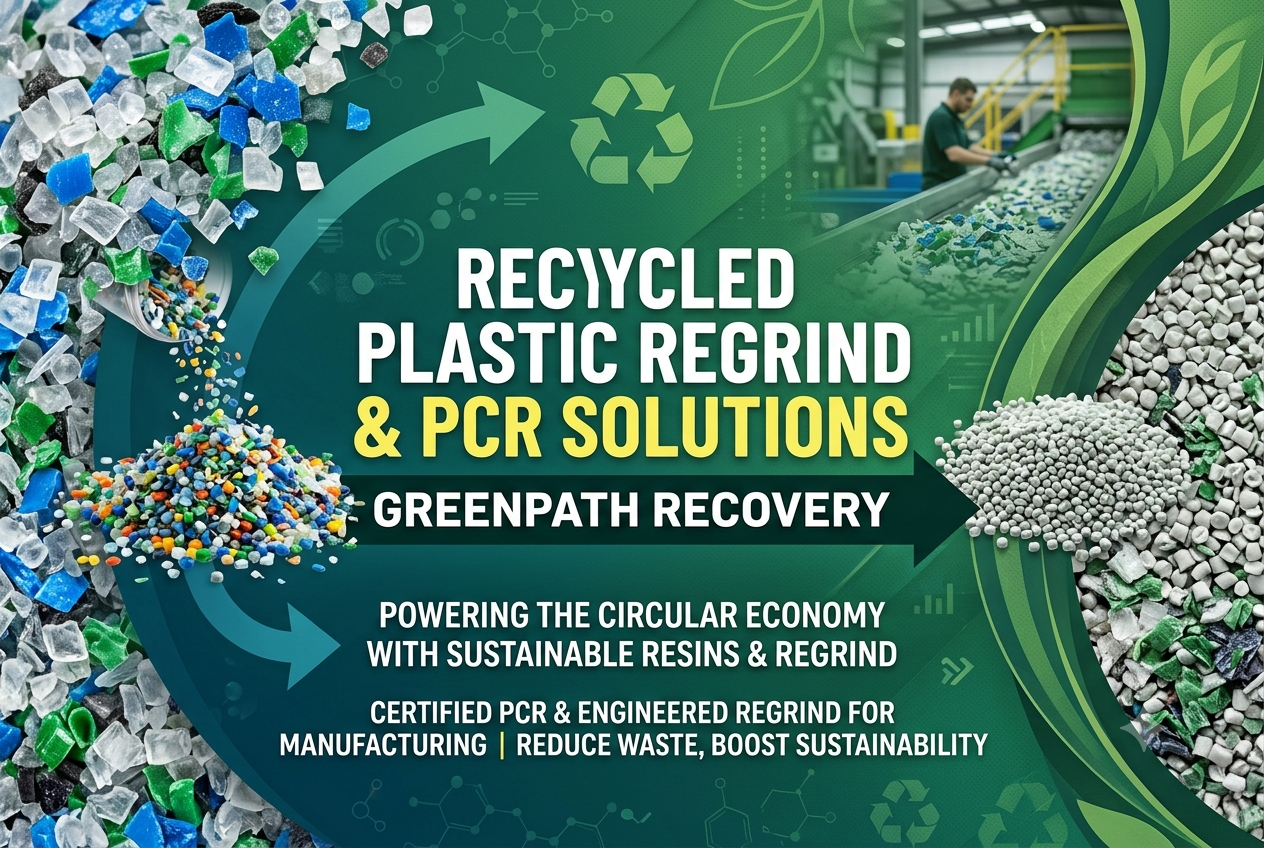
Recycled plastic regrind is a crucial part of the recycling process. By breaking recovered plastic materials into small, reusable pieces, recyclers can supply manufacturers with valuable raw materials. By combining this with post-consumer recycled (PCR) solutions, companies can reduce their waste and increase resource efficiency.
With commercial recycling solutions, GreenPath Recovery can help you find opportunities to recover valuable Plastic materials.
What is Recycled Plastic Regrind?
Recycled Plastic Regrind is plastic materials that have been ground or shredded to break the plastic down into smaller pieces. These materials have typically come from recovered plastic products or manufacturing waste.
Re-grinding the plastic materials breaks down large objects into smaller pieces, ready for sorting, cleaning, and processing.
Unlike recycled plastic pellets, Recycled Plastic Regrind is typically a raw material that will need further processing.
Common materials that can be re-ground are;
- High Density Polyethylene (HDPE)
- Polypropylene (PP)
- Polyethylene Terephthalate (PET)
- Low Density Polyethylene (LDPE)
- And other recyclable thermoplastics.
Depending on the type of polymer, contamination and colour consistency the quality of the materials will vary.
How is Plastic Regrinded?
By understanding the recycling process you can understand how waste can be turned into a useful resource. While every material and recycling centre will have differing processes, the general process is as follows;
Collect Plastic
Collect plastic waste from your commercial site, manufacturing processes, packaging processes and other suitable areas.
Sort Plastic
We sort the different plastics by polymer type, color, and form. This step is crucial because mixing incorrect plastics lowers the overall quality.
Clean plastic
Ensure the plastic is clean removing any dirt, labelling, glue or other unwanted materials.
Grind/Shred
Once workers sort the plastic, machines grind or shred it into smaller pieces. This will create Recycled Plastic Regrind.
Inspect/Process
Inspectors check the plastic for consistency and contamination to ensure it fits the target process. Depending on its intended use, the plastic may undergo further washing, sorting, extruding, and pelletizing.
This will help turn suitable plastic waste into materials that can be re-used within manufacturing processes.
Understanding Recycled PP Plastic
Manufacturers widely use polypropylene (PP)—a popular thermoplastic—in packaging, automotive parts, household items, containers, and industrial applications.
Manufacturers create recycled PP plastic by recovering used polypropylene items or suitable manufacturing waste. Once workers sort and process the plastic, they can use it to create new items.
Some common uses for Recycled PP Plastic are;
- Interior parts for automotive
- Storage containers and household items
- Industrial packaging
- Plastic pallets and crates
- And some construction and utility items.
Depending on the mechanical properties, contamination, colour and end use the plastic can be suitable.
Adding Recycled Polypropylene can help manufacturers reduce their reliance on virgin plastic.
Why Recycled HDPE Plastic is Important
High Density Polyethylene is a strong, durable and chemically resistant material. This makes it popular within manufacturing as it can be used in bottles, containers, industrial packaging and many other products.
Recycled HDPE Plastic is created by collecting suitable HDPE products and processing them into re-usable materials. Depending on the recycling process the materials may come out as flakes, regrind or recycled pellets.
PCR rHDPE refers to Post Consumer Recycled High Density Polyethylene.
PCR rHDPE can help manufacturers who want to add post-consumer recycled content. This will depend on the quality of the materials depending on how they were identified, sorted, cleaned and processed.
When deciding whether to use Recycled HDPE Plastic, you should consider the technical requirements of your products.
Benefits of using Recycled Plastic
There are many benefits to recycling plastic.
Reduce Plastic Waste
By recovering suitable plastics you can reduce the amount going to waste facilities. Recycled Plastic Regrind can help give waste plastic a second life.
Circular Manufacturing
Circular manufacturing aims to keep resources in use for longer. By recycling materials like PP and HDPE can help you move away from a take, make, waste culture.
Reduce Virgin Materials
Using recycled materials in the correct areas can help reduce the need to create new plastic resins. This can give manufacturers an alternative source of material.
Material Recovery
Commercial and industrial processes create plastic waste that may contain valuable materials for recovery. Correctly sorting and processing this waste helps you recover more materials.
Sustainability
Many companies are including waste reduction and recycled content into their environmental goals. By working with a trusted recycling partner you can create a more structured recycling plan.
PCR Solutions
Post consumer recycled materials are becoming an increasingly popular item for manufacturers wanting to improve their sustainability.
Manufacturers create PCR rHDPE and other PCR materials from plastic items that have reached the end of their useful life. Recycling facilities collect, sort, clean, and mechanically process these plastics to produce suitable raw materials.
When choosing a PCR material you should consider where it came from, quality, consistency and whether it will work with the equipment.
By combining PCR solutions with Recycled Plastic Regrind you can create a more structured process. However, Recycled Plastic Regrind cannot be used interchangeably with finished recycled resin. They will both have different requirements and uses.
Manufacturers should also consider the safety of their products, regulations and testing.
How to Create an Effective Plastic Recycling Process
A structured approach, clear material identification, and process consistency create an effective commercial recycling program.
Start by identifying what types of plastic waste you are creating. By separating the plastics by polymer you can avoid contamination.
Create a structured collection process, train staff on sorting waste and work with an experienced recycling partner.
Consider what materials the recycling company can process, what quality controls they have in place, what collection processes they have and what types of plastic they can process.
If you produce waste such as polypropylene or HDPE you may benefit from having specific recovery processes in place to make it easier to process Recycled PP Plastic and Recycled HDPE Plastic.
GreenPath Recovery can help you create practical commercial recycling solutions and help you recover valuable plastic materials.
Conclusion
Plastic recycling is an important process to create more responsible and resource efficient manufacturing processes. By recovering suitable materials you can reduce unnecessary waste and give plastic a second life.
Whether you need Recycled Plastic Regrind, Recycled PP Plastic, Recycled HDPE Plastic or PCR rHDPE there are many different recycling solutions.
It is important to choose the correct processes, ensure materials remain high quality and work with a recycling company who understand your commercial needs.
GreenPath Recovery can help you create more effective plastic recovery processes with our commercial recycling solutions.