
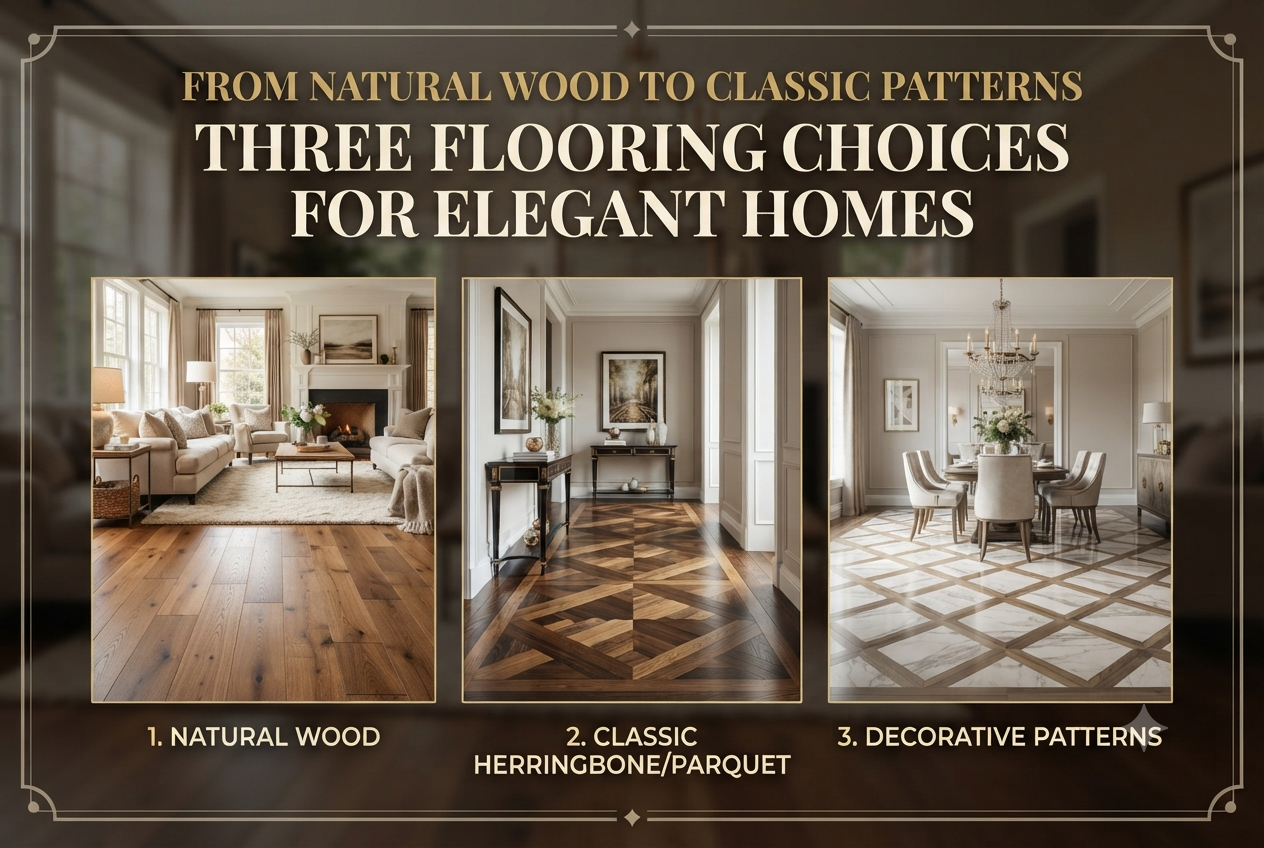
Picking the correct flooring in the home will create an aesthetically pleasing, comfortable and practical environment. Choosing the right flooring can change the atmosphere in the rooms of a house. While there are many beautiful options to choose from, natural wood remains popular due to being able to fit in with classic and modern styles.
Patterned, and natural, options are available to create the desired style within the home. While natural character mixed with modern properties in engineered herringbone flooring and unfinished wood flooring may seem similar, they offer different styles. Knowing the properties of each flooring type makes it easier to find the best flooring for the style, and practicality of, Your Home.
Engineered Herringbone Flooring
A herringbone pattern is created by placing the rectangular wooden planks at 90 degree angles to one another. This pattern has been loved in homes for many years. It creates visual interest, texture and life in rooms, even in very simple designs.
Engineered herringbone flooring simply means that the herringbone pattern is made using engineered wood. It typically includes a real wood veneer on top, and multiple layers in the core. It therefore has improved dimensional stability in comparison to traditional solid wood flooring. This is due to less expansion and contraction occurring in response to fluctuations in the conditions in the house and weather.
Why is Engineered Herringbone Flooring Popular?
This flooring is popular due to its versatility. It can be placed in modern flats, traditional living rooms and modern open plan spaces. It can easily act as an elegant focal point within the space.
Other benefits include:
Classic design: A herringbone pattern will give any space character, and is not in line with current trends.
Improved dimensional stability: Due to multiple layers, less expansion/contraction occurs in response to changes in temperature and humidity.
Natural wood: The grain and natural colour variation is visible.
Versatile design: As there are many options to choose from (wood species, levels of tone, and surface finish), this style can fit into many different designs.
Some people may prefer lighter oaks to create an open, light feeling. Others may prefer darker tones to create a rich, classic and polished feel.
Unfinished Wood
When seeking more personalisation in your interiors, unfinished wood is a great option. Unlike finished wood, the boards do not come with a final protective finish. They can be sanded down, stained and a final finish applied by you, or professionals, following installation.
Benefits
The big benefit of choosing unfinished wood boards is the personalisation. You can pick a finish to compliment your furniture, wall colours, lighting and overall feel in the space.
Why Choose Unfinished Wood?
Unfinished wood can be seen as more flexible in the final colour and feel of the surface. This can be very useful if designing a specific aesthetic, or matching with other items in the space. It can be useful to match with other timbers, or old features in the home to ensure that they match well.
Main Benefits
- Personalisation: Natural oils, stain, lacquer and protective coatings can be applied to create your desired finish.
- Even colour: As finishing is done once installed, it will create a more even finish in the space.
- Natural feel: Knots, grain and imperfections in the wood are visible, and many people like this effect.
- Versatile design: Depending on the coating, you can create a very subtle, understated, or warm, deep and rich design.
However, there is more work required in fitting unfinished wood. It generally means that more preparation and finishing work must occur on site. It can also take longer to fit than pre-finished options. In order to get the best results, it is important to get professionals to fit it, and ensure the right products are used in finishing. If incorrect products or fitting methods are used, you may not receive the desired finish.
Herringbone Engineered Wood
In homes where a patterned effect is desired, but with the benefits of modern wood flooring, Herringbone engineered wood could be the perfect choice.
Benefits of Herringbone Engineered Wood
This pattern creates visual interest in the room. It adds more interest in a space, allowing you to create a more interesting design with minimal furniture. It can fit well with many different design styles in a room, including minimalist designs, classic and traditional homes.
Key Benefits
Versatile room choice: Herringbone patterns can be placed in small rooms, and larger open plan spaces. Depending on the orientation of the planks and how they are arranged, the atmosphere in a room can be very different.
Versatile design: You can choose the wood type, plank size, level of tone and surface finish to create exactly the style you want.
Modern usage: As it is engineered, it is more dimensionally stable than solid wood. This makes it ideal for homes where conditions can fluctuate (humidity, temperatures etc).
Long lasting aesthetics: With proper installation and regular maintenance, natural wood flooring can be very long lasting in terms of aesthetics.
Be sure to consider things such as the thickness of the product, wear layer, fitting requirements and compatibility with underfloor heating.
Which Floor Should I Choose?
Ultimately, which engineered wood flooring to choose depends on your budget, daily usage and how much maintenance you expect to carry out. Although this is simple to consider, often it is not.
Be sure to consider:
Style of rooms
If you are looking for a classic aesthetic, herringbone patterns could be a good option. However, if you want more flexibility in design, unfinished wood would be a good option. This means you can personalise the final colour and finish.
Daily Usage
In busy areas of the house, such as hallways and living rooms, a durable floor should be chosen. Consider the wood type, protection, and how much maintenance is required.
Installation Requirements
Engineered wood flooring can usually be fitted using floating, glued down, or nailed methods depending on manufacturers instructions. Unfinished wood will require additional steps in installation, such as additional sanding and finishing.
Long Term Maintenance
To maintain natural wood flooring, regular cleaning should be carried out. Be sure to use appropriate cleaning products for wooden floors. To prevent excess damage to the surface, try to limit excessive moisture. Avoid harsh chemicals, and ensure that any water does not pool on the surface as this can cause serious damage over time.
Conclusion
Selecting the correct flooring to create both an elegant, and practical space is very important. Each option offers something slightly different. Herringbone patterns provide a striking appearance, while unfinished wood allows for greater flexibility in later personalisation.
For people who want classic patterns, but with modern construction, engineered herringbone flooring may be a good choice. Unfinished wood allows greater flexibility in choosing the final colour and finish in comparison. Herringbone engineered wood offers traditional style, with the stability of engineered construction.
Considering factors such as what the room will be used for, installation requirements, desired finish and realistic maintenance, flooring can be selected to create an appealing and practical space.