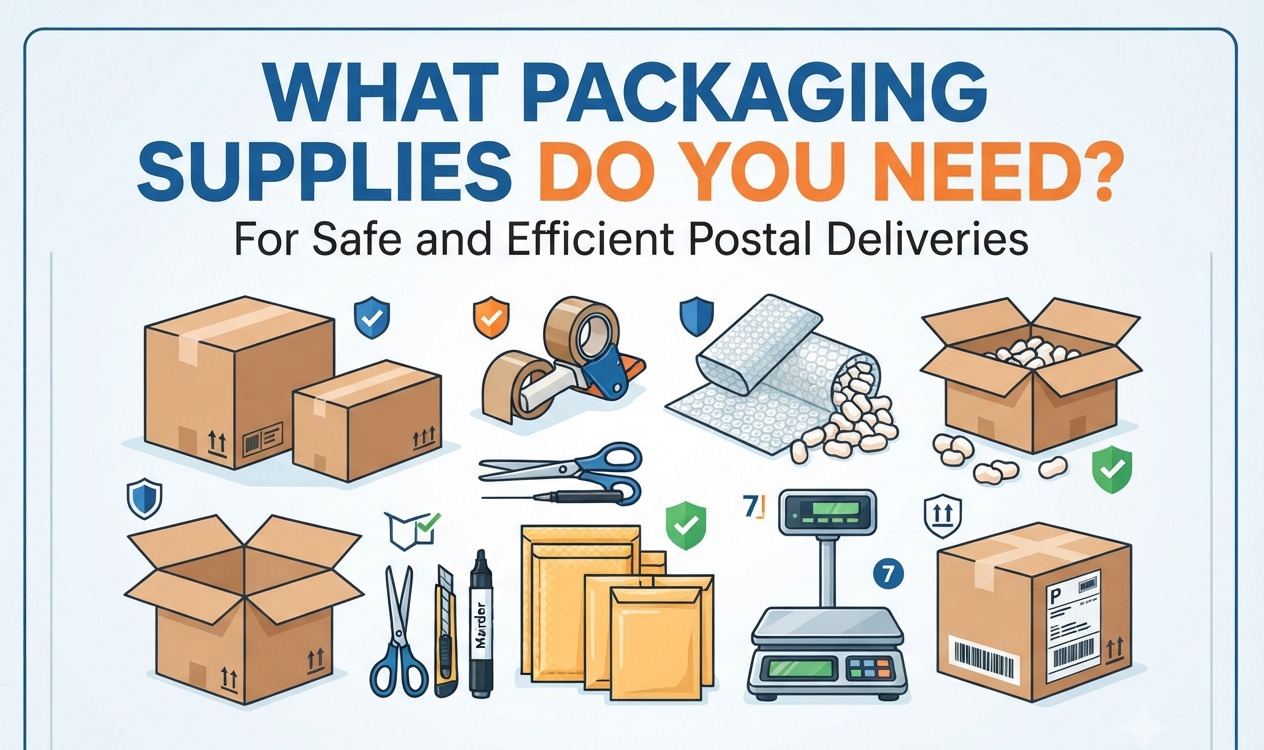
Choosing the correct packaging can prevent damage to items. For fragile items, clothing, paperwork and irregularly shaped items, using the correct packaging will provide protection from impact, compression, water and rough handling. Efficient packaging will help to save time during packing. Choosing the correct packaging for your item will also help reduce postage costs. Whether you have an online store, you are packing items from a warehouse or occasionally sending items through the post, having the correct packaging will make a difference. Below is a list of packaging that can be used for your postal packaging items.
Quick Summary:
- Packaging to Use
- Sturdy boxes
- Padded envelopes and mail bags
- Cushioning (bubble wrap, paper etc.)
- Appropriate sealing tape
- Correct sized packaging to reduce wastage and postage costs.
Why Is Correct Packaging Materials Important?
If a customer has ordered a ceramic mug, and you place it in un-cushioned packaging, it may become chipped/ damaged during delivery. If clothes are posted in large packaging, it increases the postage cost.
- Using the correct packaging for your item will give many benefits:
- Reduce damage to products.
- Reduce postage costs by using appropriately sized packaging.
- Improves customer satisfaction by delivering quality items.
- Reduces packing time by having the right materials on hand.
What Packaging Is Useful For Different Delivery Items?
Depending on what you are posting, different packaging may be necessary.
1. Sturdy Cardboard Boxes
Sturdy cardboard boxes are useful for posting items. Depending on the parcel’s weight and how carriers will handle it, you can use either single-walled or double-walled boxes.
- Single walled boxes are useful for books, domestic items and lighter items in retail.
- Double walled boxes allow stronger packaging for heavier items or items requiring extra protection.
- Book wrapping boxes are ideal for books, stationery and flat items.
For example, an online retailer selling domestic items may use double walled boxes to post kitchen items to reduce squashing during delivery.
2. Padded Envelopes
If you are posting smaller or delicate items, then padded envelopes would be a good choice. They offer protection for items but are not bulky.
- Bubble lined envelopes can be used for posting delicate items such as jewellery, small accessories and small components.
- Paper lined envelopes can be used to protect stationery and small items.
- Cardboard backed envelopes protect delicate paper items including documents, photos and certificates.
These can be very useful for E-commerce businesses that post many small items.
3. Grey Mailbags
Many clothing stores, fashion boutiques and online businesses will look to post items in light, flexible packaging. Grey mailbags are a great option for posting non-delicate items.
- Standard mailbags can be used to post clothing, fluffy toys and fabric items.
- Self sealing mailbags can help reduce packing time.
- Waterproof, robust mailbags can protect appropriate items from getting wet.
For example, a clothing business may use these mailbags to post folded t-shirts. This will allow the items to be in compact bundles.
4. Mail Tubes
Flat items can be tricky to pack. Rolling up poster designs, architectural drawings or large prints and placing in boxes is not ideal. Using postal tubes solves this issue.
- Use circular cardboard mail tubes to safely post rolled-up posters, art, and printed documents.
- More robust mail tubes can provide extra support to lengthy or heavy rolled items.
- Protective caps can be added to the ends to protect contents during delivery.
These are particularly useful in print businesses, design businesses and for sending plans or display items.
5. Bubble Wrap
Use bubble wrap for items that require extra protection, such as glassware, ceramics, decorative pieces, and electronics. This prevents damage in the event of impact with other items.
- Use small-sized bubble wrap to cushion small items, glass décor, and delicate surfaces.
- Large-sized bubble wrap effectively cushions larger and irregularly shaped items.
- Multiple layers protect very delicate items, as long as you package them correctly.
Always wrap fragile items individually before placing them in a box together.
6. Kraft Paper & Packaging Filler
To prevent items from moving during shipping, use kraft paper and packaging filler.
- Crumpled kraft paper can be placed around items to fill gaps.
- Packaging filler can be used to separate items in the same box.
- Corrugated rolls can be used to protect delicate surfaced items.
These items are very useful in gift stores, beauty businesses and businesses sending multiple items in one package.
7. Packaging Tape
Using the correct tape will ensure your packages are sealed. This will reduce the possibility of the package opening during transit.
- Acrylic tape can be used to seal standard boxes.
- Hot melt tape creates a strong seal and can be used for many general packaging purposes.
- Cross weave tape provides extra reinforcement in heavy boxes, or with challenging packaging.
Seal all seams of the package securely, paying extra attention to the bottom of the box because it holds most of the weight.
How To Choose The Right Material
Below is a quick reference guide for choosing what packaging to use for your items.
To ensure safe delivery, choose the right packaging for the specific items you are posting. Use book wraps or cardboard-backed envelopes for books and stationery, and pack clothing and textiles in mailbags. Protect fragile glass and ceramics using cardboard boxes with bubble wrap, and place posters or other rolled items inside mail tubes. For electronics and accessories, select sturdy boxes with cushioning, while multiple small items require cardboard boxes filled with packaging material to prevent shifting during transit.
Before sealing your packages, ensure nothing moves inside, check that the packaging is undamaged, and seal all openings securely. If you are sending heavy items within a package, check that the packaging can support this weight, and also check your courier for maximum size and weight capacities.
Conclusion
Carefully choosing the right packaging for your items will help to keep them safe during posting. Sturdy boxes, padded envelopes, cushioning, mail bags and reinforced tape all play a role. You will not need every item listed above for every order. Simply match the protection level to the item in the package, fill any gaps, and seal the package correctly. Taking care with packaging can prevent damaged items, returning items unnecessarily and causing customer dissatisfaction.
FAQs
1. What packaging is most important?
Boxes, mailbags, padded envelopes, bubble wrap, packaging filler and sealing tape are important for most general posting.
2. Do I need to use bubble wrap on all items?
No. Bubble wrap is only required for delicate or fragile items. Clothing and other textiles do not generally require bubble wrap, just the correct mailbag.
3. Can I post heavy items in mailbags?
No. Mailbags are best for light, non-delicate items. Heavier items require sturdy cardboard boxes to adequately support the item.
4. How can I prevent items from moving in boxes?
Kraft paper, bubble wrap, packaging filler or suitable cushioning can be used to fill gaps and prevent items moving.
5. What packaging is best for posters?
Mail tubes. This means you can post the posters/prints without having to fold them.