Shopping for engagement rings in the UK is a tough and overwhelming task. There are hundreds of styles, and almost nothing tells you which one will suit the person who’ll wear it every day. So the best way is to start somewhere else. Think about who they are and how the proposal will happen, then choose the ring to fit. A plain solitaire suits someone who dislikes fuss, while a coloured stone suits someone who’d rather be remembered for their taste.
This guide matches styles to personalities and occasions, then covers durability and stacking, so your choice still feels right in ten years’ time.
How Do You Choose an Engagement Ring Style That Fits Their Personality?
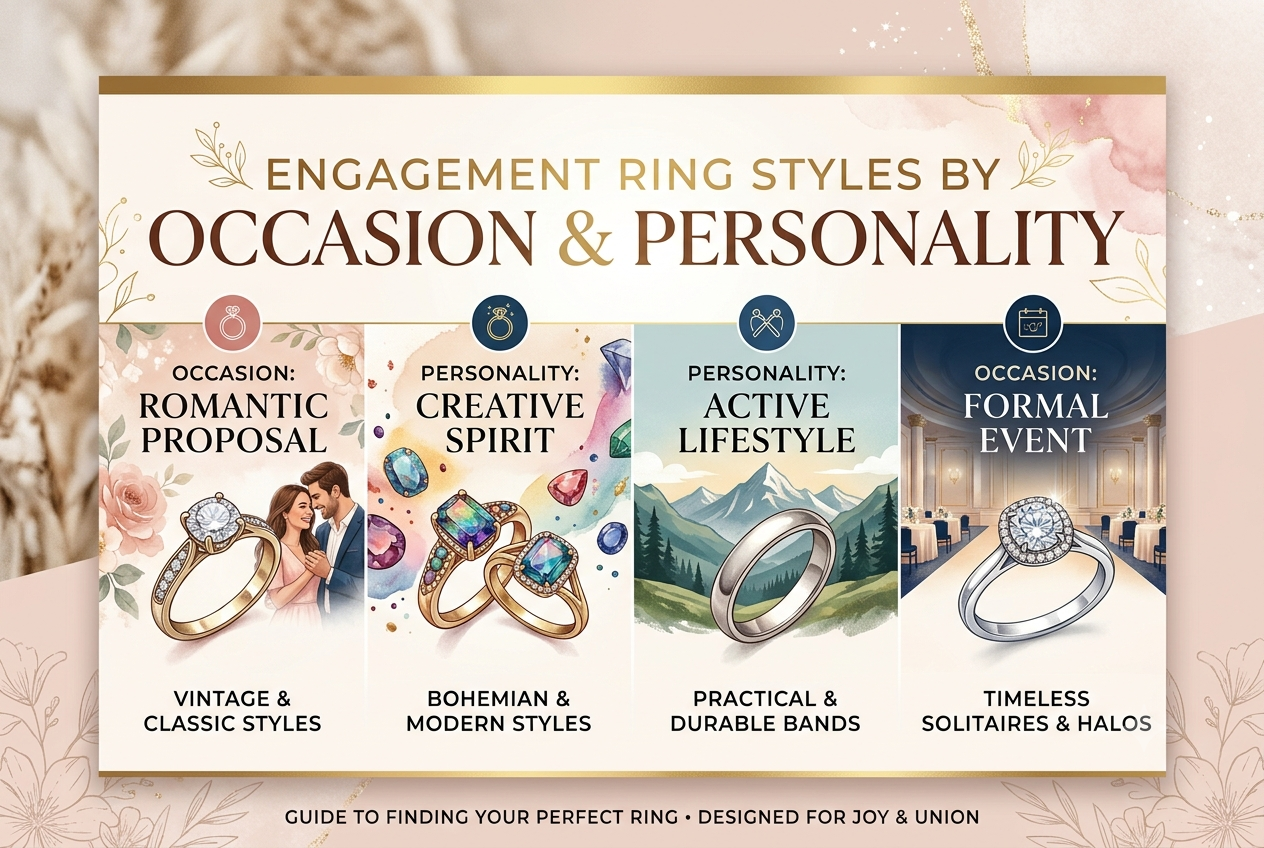
Match the ring to how they dress, work and spend their weekends. Classic dressers usually prefer a solitaire or three-stone design, minimalists like a slim band with a small stone, and colour lovers lean towards gemstones. If you’re unsure, look at the jewellery they already wear daily.
That last clue is underrated. Someone who wears a thin gold chain and small studs usually prefers a smaller ring. Someone who owns six pairs of statement earrings probably won’t thank you for restraint.
The classic romantic
A solitaire is a single stone on a simple band, and it’s popular because it works with almost everything. It is the most prudent choice if you are proposing to someone whose preferences you find difficult to interpret.
The three-stone design adds a little storytelling. Many people read the stones as past, present and future, which gives the ring a sentimental edge without making it fussy.
The modern minimalist
Think slim band, small stone, and nothing to snag on a jumper. A black diamond can be a striking choice here, because it looks deliberate and slightly edgy while staying understated.
The trade-off? Minimalist rings can look plain next to a heavier wedding band later, so it’s worth imagining the pair together.
The colour lover
Someone who wears green or has never owned a diamond might love a stone with real colour. Typing emerald engagement rings in the UK into a search bar throws up pages of options, and the popularity makes sense.
Which Ring Suits a Surprise, a Holiday or a Family Proposal?
Choose the ring for the setting as well as the person. A surprise at home allows a delicate, detailed design. A coastal or mountain proposal favours something secure and low-profile. A family occasion suits timeless shapes. Whatever the plan, pick a ring that survives pockets, gloves and nerves.
The surprise at home
Proposals at home, or over a quiet dinner, give you the most freedom. There’s no wind, no sand and no risk of a dropped box. The holiday or outdoor proposal is where a more intricate design earns its place, because it’ll be admired up close.
Many UK couples choose engagement rings for this kind of proposal that are bought a little too small or too large, so they quietly borrow a ring they already wear on that finger to check the size.
The holiday or outdoor proposal
Think of places like a cliff path in Cornwall, a ridge in the Lake District or a beach in Pembrokeshire. Beautiful, yes. These locations are also full of ways to lose a ring.
Fingers swell in heat and shrink in cold, so a ring that fits perfectly in a Highland winter can spin loose in July. Keep the box in a zipped inside pocket, never a coat pocket. A durable stone also helps, which is one reason blue sapphire engagement rings suit people who love the outdoors, since they cope well with knocks and scratches.
The family or milestone occasion
Examples include Christmas, a birthday dinner, and the anniversary of the day you met. These moments call for something with an heirloom feel. A three-stone ring or a bridal set, where the engagement ring and wedding band are designed to sit together, tends to feel right in these settings.
Are Coloured Gemstones a Sensible Choice for Everyday Wear?
Yes, if you pick the right stone and set expectations. For example, a Sapphire scores 9 on the Mohs hardness scale, close to diamond’s 10, so it copes with daily wear. Emerald scores around 7.5 to 8 and is more brittle, so it suits gentler routines.
Emerald: beautiful, but needs a little care
Anyone weighing an emerald engagement ring in the UK designs should understand the trade-off first. Emerald is a type of beryl, and most stones contain tiny natural inclusions. Jewellers often call this internal texture the “Jardin”, French for garden. It’s part of the character, but it also means a hard knock can chip the stone.
Take the ring off for the gym, gardening and washing up, and skip ultrasonic cleaners. If they work with their hands all day, or climb, or lift weights, emerald probably isn’t the right fit, and a tougher stone will serve them better.
Sapphire: the hard-wearing colour
There’s serious history behind blue sapphire engagement rings. The most famous example is the oval sapphire Prince William gave Catherine in 2010, which was originally Princess Diana’s ring, bought from Garrard in 1981. It demonstrated that blue can be just as romantic as clear.
Shade matters more than most people expect. Cornflower blues look bright and soft, while deep navy shades look dramatic and sometimes almost black in dim light. Look at the stone in daylight and under evening lighting before you decide.
How Do You Match an Engagement Ring with a Wedding or Eternity Ring?
Match the metal first, then the height of the stone, and finally the width of the band. For white-metal engagement rings, platinum eternity rings pair well and sit neatly against low settings. A half eternity or contoured band typically fits better than a full circle of stones when paired with a tall solitaire.
A short checklist helps:
- Metal. Mixing metals is fine if it’s deliberate. Accidental mismatches look careless.
- Stone height. A tall centre stone can push a straight band away from the finger, leaving an awkward gap.
- Band width. If both rings are chunky, the stack can feel heavy and uncomfortable on one finger.
- Try them together. Wear them stacked for five minutes, bend your finger, and check how they sit.
Full or half eternity?
A full eternity ring has stones all the way around. It looks wonderful, but it’s tricky to resize because the stones continue around the band. A half eternity has stones only across the top, which is more comfortable if the ring has to sit alongside an engagement ring all day.
There’s a loyal following for platinum eternity rings because the metal is dense, naturally white and develops a soft satin finish over time rather than staying mirror-bright. They’re also usually heavier and pricier than gold equivalents, and someone who loves a warm, yellow glow may simply prefer gold.
Plenty of couples shopping for engagement rings UK-wide buy the eternity ring later, as an anniversary or birth-of-a-child gift. That spreads the cost and lets the wearer’s taste settle first. It’s usually the smarter order.
Frequently Asked Questions
Which engagement ring style lasts longest?
Simple designs with a durable stone and a secure setting tend to last longest. A solitaire or three-stone ring in a sturdy band has fewer places to catch or loosen. Any ring still benefits from an annual check of the claws by a jeweller, whatever the style.
Is an emerald ring practical for daily wear?
Yes, for most office and home routines, though emerald engagement rings UK wearers should still remove them for sport, cleaning and heavy lifting. Emerald is softer and more brittle than sapphire or diamond, so a protective setting helps. It’s a lovely stone, but it asks for a little more attention.
Are sapphire rings a good alternative to diamonds?
Yes, since blue sapphire engagement rings combine real hardness with strong colour. They’re tough enough for everyday life and suit those who want something distinctive. The main thing to check is the shade, because paler and darker stones look quite different in natural and artificial light.
Should the engagement ring and eternity ring be bought together?
Not necessarily, as platinum eternity rings are often added later as an anniversary gift once you know how the engagement ring wears and what the wearer likes. Buying them together only makes sense when you want a perfectly matched stack from day one.
How do I get the ring size right for a surprise?
Borrow a ring they already wear on the same finger and compare it against a ring-size chart, or ask a close friend to help. Remember that fingers change with temperature, so aim for a comfortable fit rather than a tight one, and expect to resize if needed.
Summing up
The best engagement rings UK couples end up wearing for decades are chosen for the person, not the trend. Start with personality: classic, minimal or colourful. Then think about the occasion, because a cliff-top proposal and a quiet dinner call for different rings.
Be honest about durability and, when it’s time to add a band, match metal, height and width.
A ring doesn’t need to be the biggest or the rarest. It needs to feel like theirs and to stay that way every day.