
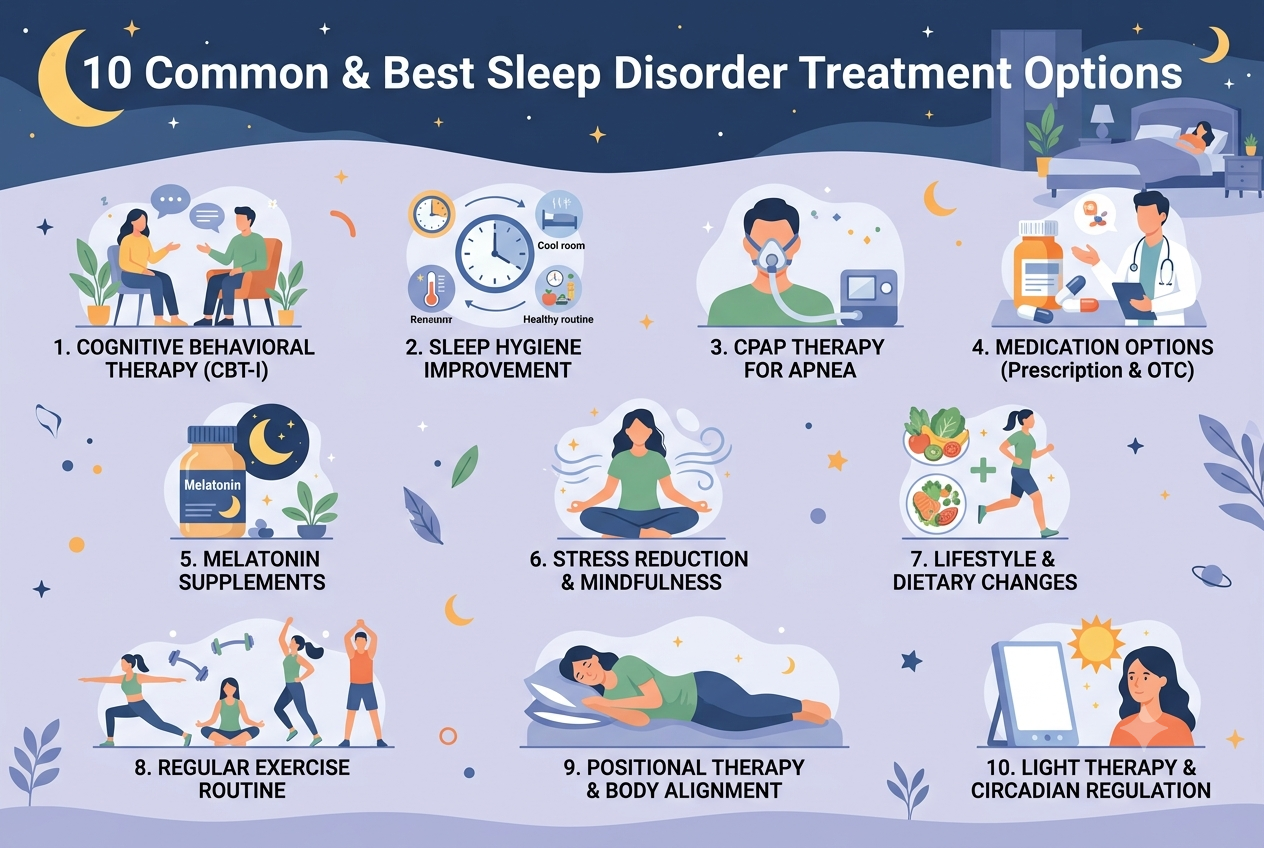
Sleep problems are known to disrupt far more than just the night’s rest. Chronic insomnia, sleep apnea, restless legs syndrome, and other sleep disorders can interfere with concentration, work, and even simple activities of daily living. Finding appropriate sleep disorder treatment is an important consideration when the problem persists.
Insomnia, sleep apnea, restless legs syndrome, circadian rhythm abnormalities, plus many other sleep disorders may require different treatment options. Knowing the best available choices can help you decide what type of self-care to try or when to seek professional evaluation for better sleep.
Sleep Disorder Treatment Options
The following are the best available treatment options:
1. CBT For Chronic Insomnia
Cognitive behavioral therapy for insomnia is one of the leading treatment options for chronic insomnia. CBT-I typically focuses on thoughts, behaviors, and patterns that contribute to persistent sleep problems. It may incorporate various techniques that create a more consistent sleep schedule, encourage only sleeping in bed, and other methods for reducing frustration.
This type of treatment may be recommended especially for chronic insomnia that persists even after making basic behavioral changes. It is an active treatment that usually requires multiple sessions, and a professional can help determine if this type of insomnia treatment near me would be appropriate based on your symptoms and sleep patterns.
2. Sleep Hygiene
Healthy sleep habits are an important consideration for many sleep disorders. The recommendations can’t always resolve the problem, but improving sleep hygiene can be beneficial or necessary alongside some types of treatment. Good sleep hygiene includes a consistent bedtime and wake up time, comfortable bedroom environment, and limiting stimulating activities before bed.
Avoiding the bed for work, television, and other activities is also important. The key is to encourage the body to know when it’s time to sleep and when it’s time to be awake.
3. Treating Related Medical Conditions
Some types of chronic insomnia and other sleep disorders exist as a secondary condition due to another medical problem. Pain, breathing difficulties, hormonal problems, neurological conditions, acid reflux, and many other health concerns can contribute to restless nights and poor daytime alertness. Treating the underlying cause could be necessary for some individuals.
Your health care professional can help evaluate your medical history, medications, sleep patterns, and symptoms to determine what might be necessary. This is why resolving persistent sleep problems is more than just treating insomnia — it’s about identifying what may be contributing to the problem.
4. Prescription Medications For Insomnia
Prescription medication can be an important consideration for some people with insomnia. A professional can evaluate the severity and duration before determining if this type of treatment would be appropriate. Different types of sleeping pills work differently and can carry various risks and benefits.
Some medications are usually prescribed for short-term use, while others may be considered in rare or specialized cases. When seeking out insomnia treatment near me, it’s important to keep in mind that finding out why you can’t sleep can be as important as getting the right medication.
5. Sleep Apnea Treatment
Sleep apnea is characterized by pauses in breathing or abnormally shallow respirations that occur multiple times throughout the night. Morning headaches, daytime sleepiness, gasping during sleep, and loud snoring are some of the possible symptoms. The treatment for sleep apnea varies based on the diagnosis, but positive airway pressure therapy is one of the most common choices.
Other treatment options may be recommended to reduce the risk factors and manage the condition. Left untreated, sleep apnea can interfere with sleep quality and overall health.
6. Restless Legs Syndrome Treatment
Restless legs syndrome causes uncomfortable sensations in the legs that can begin or worsen during periods of rest and make it difficult to fall asleep or stay asleep. The sensations tend to be worse at night, and treatment depends on the individual and what’s causing the problem. A healthcare professional can review your medical history and current medications to determine what options may be appropriate.
Some people with restless legs syndrome benefit from making lifestyle changes, while others may require additional medication. Identifying the underlying cause, if there is one, is important because treatment can vary considerably between patients. If nighttime leg sensations are frequently interfering with your sleep, seeing a professional can help determine if you might benefit from restless legs syndrome treatment.
7. Resetting Circadian Rhythm
Some people have persistent sleep problems because their body clock isn’t aligned with their desired bedtime and wake up time. This can occur with circadian rhythm sleep disorders, shift work, frequent travel, or irregular schedules. Adjusting your sleep schedule to a healthier pattern is an important consideration.
In some cases, a professional can help determine what type of light exposure to use based on your unique needs. The timing is important because different wavelengths of light can encourage wakefulness or promote deeper stages of sleep.
8. Reducing Stress And Anxiety
Stress and anxiety are known to contribute to chronic insomnia. When people are having trouble unwinding at bedtime, they may continue thinking about various aspects of work, family, money, and other concerns. Many relaxation techniques are available, including focused breathing, muscle relaxation, stretching, and even a relaxing bedtime bath or tea ritual.
These techniques aren’t usually a standalone treatment for insomnia but can be helpful additions to a more comprehensive plan. If stress and anxiety are significantly impacting your ability to fall asleep or stay asleep, addressing the root cause can be more effective than only trying to fall asleep faster at the end of the night.
9. Reviewing Medications And Substances
Some prescription or over-the-counter medications can interfere with sleep. Similarly, substances such as caffeine and nicotine can disrupt healthy sleep patterns. If your insomnia seems to be related to a medication or change in dose, talk to your healthcare professional. Never attempt to quit a prescription medication on your own.
Caffeine can also be a consideration, especially if you consume it later in the day or are more sensitive than average. A medication review from a professional can help identify what changes may be necessary for chronic insomnia treatment.
10. Evaluation By A Sleep Disorder Specialist
If sleep problems persist despite your efforts, seeing a professional may be the most valuable choice. A sleep disorder specialist in Richardson can help determine what type of treatment you might need based on your symptoms. In some cases, a sleep study may be recommended to help confirm the diagnosis.
Evaluation is especially important when symptoms are persistent or severe, or when daytime sleepiness and other effects begin to impact your life. It can differentiate chronic insomnia from other disorders that may require a different treatment plan.
How To Choose The Right Sleep Disorder Treatment?
The best type of treatment depends on what is causing the sleep problems. Someone with chronic insomnia will need a different type of care than someone with severe nighttime breathing issues. Begin by considering how long the symptoms have persisted and what occurs at night while you sleep.
Keeping a sleep diary can help you record patterns and provide valuable information to a professional. It may be difficult to remember everything during a short medical appointment. If you’ve been searching for sleep disorder treatment near me, it’s important to consider those who offer proper evaluation rather than simply treating temporary sleep loss.
When Is Chronic Insomnia Treatment Needed?
Chronic insomnia treatment may be appropriate when sleep loss persists for an extended period of time and begins to impact daytime functioning. Difficulty falling asleep, waking up frequently during the night, waking up earlier than intended, and other symptoms are potential signs.
The daytime consequences can include fatigue, irritability, poor concentration, lack of motivation, and decreased productivity. If sleep loss becomes a regular part of your life, seeking professional evaluation can help determine appropriate treatment options.
What To Look For In A Sleep Disorder Specialist?
When searching for a sleep disorder specialist, it’s important to find someone with experience treating your particular condition. Ask yourself the following questions:
- What could be causing my sleep problems?
- Do I need a sleep evaluation?
- Is there another medical condition affecting my sleep?
- What treatment options are available?
- Could my medications be impacting my sleep?
- How will my treatment progress be monitored?
FAQs
What Is The Best Treatment For Sleep Disorders?
There is no single method that can effectively treat every type of sleep disorder. CBT-I may be recommended for chronic insomnia, while other conditions such as sleep apnea may require specialized treatments to improve nighttime breathing.
How Can I Find Sleep Disorder Treatment Near Me?
You should look for a qualified healthcare professional who can evaluate your symptoms and recommend treatment options based on the underlying cause. Ask about their experience, services offered, accessibility, and follow-up care.
What Is The Best Treatment For Chronic Insomnia?
CBT-I is an essential consideration for chronic insomnia. Other treatment options for sleep loss include medication, improving sleep habits, managing related health concerns, and reducing stress.
When Should I See A Sleep Disorder Specialist?
Seeing a specialist is an important consideration when sleep problems persist and begin to interfere with your normal daytime activities. Persistent insomnia, sleep apnea symptoms such as loud snoring and gasping, or unusual nighttime sensations are all reasons to seek out professional evaluation.
Can Sleep Problems Be Treated Without Medication?
Yes, many sleep disorders can be successfully managed without medication through behavioral therapy, adjusting your sleep schedule, CBT-I, relaxation techniques, or managing an underlying medical condition.
Conclusion
Persistent sleep problems shouldn’t always be treated by simply trying to sleep longer. A professional evaluation can help determine whether chronic insomnia, nighttime breathing issues, an irregular body clock, another medical concern, or a mix of factors are responsible. If you’re looking for sleep disorder treatment, it’s important to seek professional guidance when sleep loss begins to interfere with your daytime life. The proper evaluation from an expert like Dr Mayur Patel can help find the underlying problem and determine what treatment options are necessary for better, more consistent rest.